LIHEAP assistance can pay part of your heating or cooling bill, and applying costs nothing.
One request moves your case in 48 hours instead of weeks, and it has a name.
Read on for the income limits, the papers to gather and where to send your application.
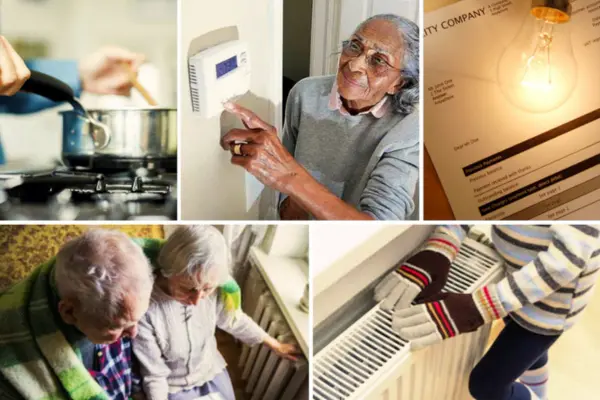
What LIHEAP assistance is and what it covers
LIHEAP assistance is the help offered by the Low Income Home Energy Assistance Program, a federal program that puts money toward home energy costs for households with low income. Federal funds go to every state, to the territories and to many tribal governments, and each one runs the program with its own rules, its own calendar and sometimes its own name.
Those four uses come straight from the Administration for Children and Families, the federal office that runs the program: help paying heating or cooling bills, emergency services during an energy crisis such as a utility shutoff, and low cost home improvements known as weatherization. Depending on where you live, the same program may be called HEAP, Fuel Assistance, Energy Assistance or Utility Assistance.
The money almost never reaches your pocket. Your state pays the utility company or the fuel vendor, and you see the result as a credit against the balance on the account. Which brings up the question that stops most families before they even start: who is allowed to ask.
Who qualifies for LIHEAP assistance
Income decides it, and your state draws that line inside a federal frame: a household cannot be eligible above the greater of 150% of the federal poverty guidelines or 60% of the state median income, and no state may set its limit below 110% of the poverty guidelines.
| Income test | What it means |
|---|---|
| Federal ceiling | 150% of poverty guidelines or 60% of state median income |
| Federal floor | No state below 110% of the poverty guidelines |
| One person | About $23,940 a year at the 150% mark |
| Household of four | About $49,500 a year at the 150% mark |
| Automatic path | SNAP, SSI, TANF or some veterans benefits |
| Priority homes | Age 60 and over, disability, young children |
The dollar figures come from the poverty guidelines published by the Department of Health and Human Services, which are revised every year and rise with each extra person in the home. Your state agency applies the version in force when you apply, so treat the two amounts above as the shape of the rule and confirm the exact number for your household size.
How much the program pays
Benefit size is set by your state, not by Washington, and it moves with your income, the number of people in the house, the fuel you use and local energy prices. Some programs pay up to around $1,000 for the season. Federal guidance is honest about the limit: it is unlikely that a benefit will cover an entire year of heating or cooling. Even a partial credit, though, changes what the month looks like.
What changes at home when the credit lands
The difference shows up as breathing room, not as a windfall, and that is exactly what most households need.
Before the credit, the pattern is familiar. The bill arrives higher than last month, the thermostat goes up two degrees to save money, the grocery list gets shorter, and the payment slides into next month with a late fee attached. The National Energy Assistance Directors Association puts the average household electricity cost for a single cooling season at close to $800, which explains why so many families ration comfort instead of using it.
After the credit posts, the balance on the account drops and the bill stops being the deadline that decides everything else in the budget. Nobody promises a zero balance, and no program approves every application. What the help buys is a month where the lights stay on, the house stays at a safe temperature and the money for food stays where it belongs.
That is the calm version. The urgent version has a notice taped to the door, and it follows different rules.
Crisis help when a shutoff notice arrives
Say the words energy crisis when you contact the office, because that phrase starts a separate, faster track with deadlines written into federal law.
Under those rules the agency has to act within 48 hours of a crisis application, and within 18 hours when the household is in a life threatening situation. Federal policy also allows LIHEAP money to be used for weather related emergencies, supply shortages and other home energy emergencies, including getting electric service reconnected. There is no federal cap on how large a crisis benefit can be, so your state decides whether it pays a fixed amount or whatever it takes to end the emergency.
⚠️ Attention: nobody can charge you to apply or to release a benefit. A request for a fee, a gift card or a bank password is a scam, never part of the program.
Whether your case is urgent or ordinary, the path into the program is the same, and it is shorter than most people expect.
How to apply for LIHEAP assistance step by step
Before you start, put the paperwork in one pile, because a missing document is the most common reason a file sits waiting.
Letters from SNAP, SSI, TANF or a veterans benefit are worth adding to the pile as well, since they can open the automatic route your state may offer. With the folder ready, the process runs like this.
- 1Find the office that serves your address using the federal LIHEAP page or the state and territory contact list.
- 2Call the free referral line at 1-866-674-6327, open weekdays from 9:00 am to 7:00 pm Eastern Time, if you would rather ask a person.
- 3Check how your state takes applications, since some accept them online and others ask you to come in person or send them by mail.
- 4Send the form with every document attached and keep a copy or a screenshot of the confirmation.
- 5Follow up before the season closes and mention a shutoff notice right away, because that moves the file to the crisis track.
Two mistakes cost the most time: sending income proof for only one adult, and applying with a bill in a name that is not on the lease. If the office asks for something else, answer the same week, because funds for the season are limited and many states stop taking new files when the money is gone.
Common questions about LIHEAP assistance
These are the doubts that come up most often once people know the program exists.
Is LIHEAP assistance really free to apply for?
Yes. There is no fee at any stage, and no legitimate office asks you to pay to release a benefit. Anyone charging for the form, for a faster review or for a supposed approval is running a scam.
Do I need an overdue bill to qualify?
No. You can apply with the account current and nothing in collection. Part of the point is to keep a household from falling behind, so waiting for a notice only makes your situation harder.
Can renters get energy bill help?
Renters apply in every state. If the bill is in your name, bring it; if heating is included in the rent, the lease usually works as proof. Ask your state office how it treats utilities paid by the landlord.
How long does an answer take?
Crisis applications have a federal clock: 48 hours, or 18 hours when the home is in a life threatening situation. Regular applications depend on how busy your state office is, so ask for the current timeline when you file.
Does the program help with air conditioning in the summer?
Cooling is part of the program, so a high electricity bill in the hot months counts. What each state covers is written in its own plan, which is why one place pays a credit on the electric bill and another also helps with equipment.
How HS.C Online helps you keep looking
Energy help rarely travels alone, and the same folder of documents usually opens more than one door.
This site exists to make public programs and free tools readable for people who do not have an afternoon to spend inside government websites. We describe what a program actually does, who it is written for and what the process demands, in plain language, and we keep pointing back to official channels instead of standing between you and them.
If the energy bill is the pressure point this month, food, housing, health coverage and study costs are usually next on the list. Reading about those programs with the same calm you brought to this one is how a tight month turns into a plan.
Ask for help before the season funds run out
Gather the four documents, find your state office and file the application this week, while money for the season is still on the table.
Nobody can promise you an approval, and no one should charge you a cent to try. What you can count on is a process that costs nothing, a faster lane if service is at risk, and a phone line where a person explains what your state needs. The federal LIHEAP page lists the office for your address, and EnergyHelp.us carries the same information on where and how to apply in your area.
ℹ️ Important: this content is informational and independent. We have no link, sponsorship or control over LIHEAP, the Department of Health and Human Services, any state agency or any utility company. Limits, amounts and deadlines change, so confirm everything through official channels before you apply.